When it comes to radio frequency tech, the Rf Matching Filter is kinda a big deal. Basically, it helps make sure your signals are crystal clear by reducing reflection and giving you the most power transfer possible. If you’re an engineer or tech working on RF stuff, understanding how these filters work is super important if you wanna improve your system’s performance.
You’ll find these filters in a bunch of different areas—think telecom, radio broadcasting, you name it. A good Rf Matching Filter can really cut down on signal loss, which is a total game-changer. But, getting it just right isn’t always easy. It takes some finesse and careful tweaking of components and setups. Engineers often hit a few snags trying to optimize their filters, which can lead to inefficiencies if they don’t get it just right.
Designing a solid Rf Matching Filter is pretty complex and needs a mix of theoretical know-how and hands-on experience. Nail it, and you can seriously boost the reliability of your system. As technology keeps advancing, mastering Rf Matching Filters is becoming even more crucial. Getting a good handle on this stuff really sets you up for better RF performance down the line.
What is an RF Matching Filter?
Rf Matching Filters play a critical role in optimizing signal transmission in communication systems. They ensure maximum power transfer by minimizing reflections within the circuit. This helps improve overall system efficiency. Effective Rf Impedance Matching can lead to a significant reduction in signal distortion and increased bandwidth.
According to a recent report by the IEEE, poorly matched RF impedances can result in losses exceeding 30%. This means that if a matching filter isn't effectively implemented, significant energy is wasted, degrading system performance. Additionally, a study from the Journal of Electromagnetic Waves and Applications highlighted that more than 60% of RF interferers arise from inadequate impedance matching.
Rf Matching Filters can often introduce complexity into the design. Engineers may struggle with finding theoptimal solutions for different frequencies. This trial-and-error process may feel frustrating. Continued research and development are crucial to evolving matching techniques. The challenge includes balancing compact designswith performance demands. Understanding the intricacies of Rf Impedance Matching is essential forimproving device longevity and reliability in vibrant communication networks.
The Role of RF Matching Filters in Communication Systems
Rf Matching Filters play a crucial role in communication systems. They ensure that the transmitted signals are efficiently coupled into antennas, leading to improved performance. By minimizing reflections, these filters enhance signal clarity. A well-matched filter can significantly reduce losses, ensuring that maximum power reaches the antenna.
Tip: Regularly assess your RF components. Over time, performance may degrade, leading to inefficiencies.
In many cases, designers face challenges with impedance mismatches. These can lead to signal loss and affect the overall reliability of communication systems. Implementing Rf Matching Filters can mitigate these issues. The design process requires a balance of various parameters, which isn't always straightforward.
Tip: Experiment with different filter configurations to find the best match for your specific application. Adaptability is key to achieving optimal performance.
How RF Matching Filters Improve Signal Quality
Rf Matching Filters play a crucial role in improving signal quality across various applications, such as telecommunications and broadcasting. By ensuring optimal impedance matching, these filters reduce signal reflection and enhance power transfer. According to a report from the IEEE, systems utilizing effective RF matching techniques can improve signal integrity by as much as 30%. This is significant in environments where signal degradation can occur due to mismatched impedances.
Additionally, Rf Matching Transformers can significantly mitigate distortion and interference. When devices operate at their ideal impedance, the received signals are clearer, leading to better overall performance. A study from the Journal of Applied Physics indicates that a well-designed Rf Matching Filter can minimize insertion loss, resulting in an increase in effective signal strength. However, finding the perfect match is often challenging and may require iterative testing and design adjustments.
Even with advanced Rf Matching Filters, there are situations where unexpected challenges arise. Environmental factors and component tolerances can affect performance. Therefore, continuous evaluation and adjustment are necessary for maintaining high signal quality. Emphasizing the role of RF matching transformers, engineers must acknowledge that no filter is perfect. The pursuit of excellence in signal quality remains an ongoing challenge in the field of RF engineering.
Principles of Operation for RF Matching Filters
RF matching filters are essential components in wireless communications and signal processing. Their primary function is to optimize the power transfer between components by maximizing the power delivered to a load. These filters are designed to reduce reflections and improve efficiency in systems operating at radio frequencies. Recent industry reports highlight that RF matching filters can enhance overall system performance by up to 30%, making them critical in applications such as telecommunications and radar systems.
The operation of RF matching filters is based on specific design principles. They utilize impedance matching techniques, aligning the output impedance of an amplifier with the load impedance. A well-matched filter minimizes signal loss and maximizes the signal-to-noise ratio. According to a study published by the IEEE, incorrect matching can lead to losses exceeding 10%, emphasizing the importance of precise calculations and adjustments. This highlights the complex nature of filter design, as even slight errors in component values can lead to significant discrepancies in performance.
In practice, engineers often use simulation software to model RF matching circuits before physical implementation. This step reduces the risk of errors. However, simulation results do not always match real-world behavior. Reflections and parasitic elements can cause unexpected issues. Continuous testing and refinement are necessary for achieving optimal results. The dynamic nature of RF environments makes ongoing evaluation critical in ensuring that matching filters function as intended.
What is Rf Matching Filter and How Does It Work? - Principles of Operation for RF Matching Filters
| Parameter | Description | Typical Values | Application Example |
| Impedance | The resistance presented by a circuit at a certain frequency. | 50 Ohms, 75 Ohms | RF Transmitters |
| Bandwidth | The frequency range over which the filter operates effectively. | 10 MHz to 100 MHz | Wireless Communication |
| Insertion Loss | The loss of signal power resulting from the insertion of the filter in a circuit. | 0.5 dB to 3 dB | Signal Processing |
| Quality Factor (Q) | A measure of the filter's selectivity (resonance width). | 10 to 50 | Antenna Matching |
| Type of Filter | The design and characteristics of the matching filter. | L-C, Pi, T networks | RF Amplifiers |
Types of RF Matching Filters and Their Applications
RF matching filters are essential in optimizing the performance of communication systems. They ensure that the impedance between the antenna and transmitter is aligned. Without a proper match, signals can be reflected, leading to power loss. This can result in inefficient transmissions.
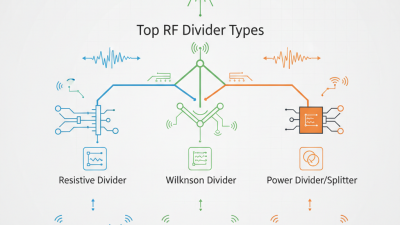
Several types of RF matching filters exist, each serving specific needs. Broadly speaking, passive and active filters are common. Passive filters, such as LC circuits, are straightforward and cost-effective. They are reliable in basic applications. Active filters, while more complex, offer gain and can shape signals more precisely.
In practical applications, RF matching filters play critical roles in wireless communication, broadcasting, and radar systems. They enhance the efficiency of signal transmission and reception. Yet, the choice of a matching filter may involve trade-offs. Designers must consider factors like bandwidth and insertion loss. Each decision impacts overall system performance. Finding the right balance is key, yet it can be challenging. Refining designs often leads to continuous improvement in device efficiency.
Design Considerations for Effective RF Matching Filters
When designing an effective RF matching filter, several core considerations come into play. The primary goal is to ensure maximum power transfer from the signal source to the load. This requires a good understanding of the impedance characteristics of both the source and the load. Achieving this match is critical, as any mismatch can lead to signal reflection, loss, or distortion.
A crucial factor is the frequency response of the Rf Filter. In many cases, the design must accommodate the desired frequency range while minimizing losses. Engineers often use simulation tools to visualize performance under different conditions. This allows for an iterative process of tweaking components. However, designers should be cautious of over-optimization, which can lead to a filter that performs well in theory but fails in practical applications.
Tips: Always validate your design with real-world measurements. Theory can differ significantly from practice. Consider environmental factors that might affect performance. Another key aspect is material selection; components that may seem adequate on paper might not perform well under high-frequency conditions. Testing prototypes rigorously can help identify these issues early in the design phase.
Challenges in Implementing RF Matching Filters in Circuits
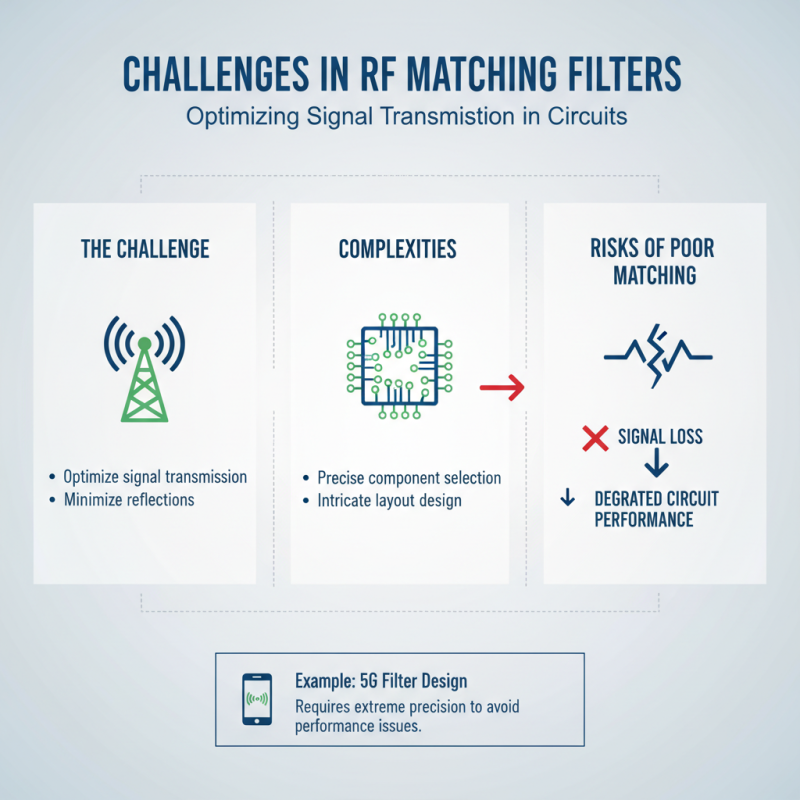
Implementing RF matching filters in circuits presents unique challenges that engineers must navigate. These filters are crucial for optimizing signal transmission and minimizing reflections. However, the complexities involved often lead to unexpected issues. For instance, designing a 5g Filter requires precise component selection and layout to avoid performance degradation. Poor matching can result in signal loss, adversely affecting the overall circuit performance.
One major hurdle is the frequency dependency of components. Components behave differently across frequencies, complicating the design process. For example, a matching network that works well for one frequency may not work effectively at others. Engineers must consider these variations and test their designs extensively. Furthermore, environmental factors can impact filter performance, requiring robust designs that can withstand such conditions.
Thermal stability is another concern. Components may shift in performance under varying temperatures, making reliability an issue. The need for fine-tuning and adjustments adds to the design complexity. Engineers often face the challenge of balancing performance and practicality, and sometimes, despite best efforts, the outcome may not meet expectations. Continuous iteration is essential to optimize performance, ensuring all RF matching filters operate effectively in real-world applications.
FAQS
: An RF matching filter optimizes signal transmission by ensuring maximum power transfer and minimizing circuit reflections.
Impedance mismatch can lead to energy losses exceeding 30%, degrading overall system efficiency and increasing signal distortion.
Engineers struggle with frequency dependencies and finding optimal component solutions, leading to potential frustration in the design process.
Theoretical designs may not perform well in practice, so real-world testing is crucial to ensure reliability and performance.
Environmental factors, such as temperature variations, can impact performance; robust designs are necessary to withstand these conditions.
Components that seem adequate on paper might fail under high-frequency conditions, making careful material selection vital for success.
Over-optimization can result in excellent theoretical performance but may not translate well to practical use, leading to unexpected issues.
Thermal stability is crucial; components may shift performance with temperature changes, affecting the reliability of the entire system.
Rigorous testing of prototypes helps identify potential issues early, improving performance and longevity of RF matching filters in real-world applications.
Unexpected issues often arise from component behavior across different frequencies and environmental influences, complicating the design process.
Conclusion
An RF Matching Filter is a crucial component in communication systems that ensures optimal impedance matching between the transmitter, receiver, and the antenna. These filters play a significant role in enhancing signal quality by minimizing reflections and maximizing power transfer. By adjusting the response characteristics of RF signals, they can effectively reduce signal loss and improve overall system performance.
The principles of operation for RF Matching Filters involve transforming the complex impedance to enhance efficiency. Various types of RF Matching Filters, such as low-pass, high-pass, band-pass, and band-stop filters, are designed for specific applications ranging from RF amplification to frequency selection. When designing these filters, engineers must consider factors such as frequency response, insertion loss, and the physical layout of circuits to overcome challenges in implementation while achieving effective performance in a wide range of communication technologies.

 +86-15916242887
 CONTACT US